Homepage

NSW_16WestRuling8

Analysis: West Fertilizer report details sequence of a catastrophe

Print

How the West Fertilizer Co. fire began still isn’t known. But the probe has unveiled the detailed sequence of a catastrophe: Heat, pressure and shock made dual explosions, milliseconds apart, that killed 15 people and left a town to mourn, clean up and start over.

Something started a blaze in the seed room of the company’s fertilizer and seed building, a 13,000-square-foot structure by the spur rail on the northeast side of town.

It could have been an old golf cart stored there, or a problem with the warehouse’s electrical wiring, or arson. The evidence, investigators from the Texas State Fire Marshal’s Office and the federal Bureau of Alcohol, Tobacco, Firearms and Explosives said Thursday, is insufficient to prove any of them.

Still, they reconstructed most of what happened and laid it out in public for the first time:

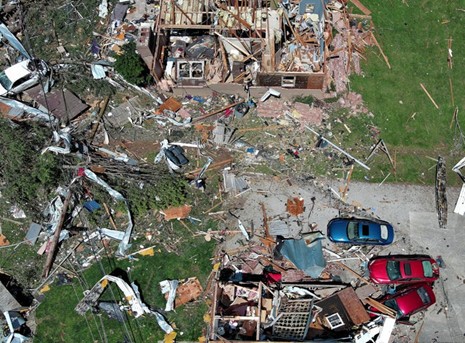
The seed room was on the building’s north end, blown to oblivion along with most of the rest of the company’s assets. The crater, 93 feet across and 10 feet deep, marks its location.

Parked inside the seed room was “a rickety old golf cart,” West Mayor Tommy Muska said, having seen workers driving it many times. It was battery-operated, recharged by plugging it into an outlet.

Nearby, in the same building, were wooden bins that held about 50 tons of ammonium-nitrate fertilizer, piles of a solid chemical formed into tiny spheres — think of the look of DippinDots ice cream. Outside, a rail car held an additional 100 tons of fertilizer.

For 22 minutes, the fire burned — through the time when volunteer firefighters got the call, responded, asked for backup and started preparing for what might come.

Here is what came: The fire kept getting hotter, raising the temperature of some of the ammonium nitrate — that is, shifting the chemical toward instability and increasing the likelihood that it would explode if something heavy struck it.

Something heavy did. It was debris and equipment from the fiercely burning and rapidly collapsing building, and it set off an explosion.

That first detonation set off another — thousandths of a second later, so fast that witnesses couldn’t tell them apart, but a frame-by-frame examination of their videos did.

So did the U.S. Geological Survey’s earthquake-detecting seismograph west of town at Lake Whitney — two distinct impacts.

All told, about 28 to 34 tons of ammonium nitrate exploded, but an additional 20 to 30 tons in the building did not. The fertilizer in the rail car did not explode either.

The amount that did detonate had the explosive power of 15,000 to 20,000 pounds of TNT. It flung bits of buildings and vehicles up to 2.5 miles, though most of the debris fell within 3,000 feet, more than a half-mile.

The search for answers on the ground took a month of combing through 14 to 15 acres, even sifting through hundreds of thousands of pounds of corn and milo by hand. It turned up an enormous amount of evidence but not enough to prove any specific cause to a scientific certainty.

That left three possibilities.

One was the battery-powered golf cart. All the investigators could find was a brake pad and an axle, so they couldn’t prove that the cart had an electrical problem that started the fire. Neither could they prove it didn’t have one, so it stays in the mix.

Over the past 15 years, tens of thousands of golf carts have been recalled because of fire risks, the Consumer Product Safety Commission says. Most were gasoline-powered and had problems with fuel leaks from various causes.

One was a battery-powered Club Car model recalled in February 1999 because of electrical problems that posed a fire risk. The make and model of the cart at West Fertilizer wasn’t clear Thursday.

Another possibility was an electrical system fire. Investigators exonerated the heavy-duty, 480-volt system in the warehouse that ran the big equipment. But the separate conventional 120-volt system couldn’t be ruled out, so it stays in.

The third was arson. On that one, investigators refused to comment except to say that only the part of the investigation on the ground was closed.

Staff writer Scott Goldstein contributed to this report


Story By: Randy Lee Loftis

Original Link: http://www.dallasnews.com/news/west-explosion/headlines/20130516-analysis-west-fertilizer-report-details-sequence-of-a-catastrophe.ece

Car fumes

Kidney problems linked to traffic fumes

Print

Living close to a busy road may increase your risk of developing kidney problems, research suggests.

The US investigators who discovered a link in 1,100 patients believe traffic pollution could harm the arteries that supply the kidneys.

Experts already know that long-term exposure to exhaust fumes increases the risk of vascular diseases such as heart attacks and stroke.

The work is published in the Journal of Epidemiology and Community Health.

The study authors, Dr Murray Mittleman and colleagues at the Beth Israel Deaconess Medical Center in Boston, measured kidney function using a recognised test called the glomerular filtration rate (GFR).

The GFR is an indicator of how well the kidneys are working. A low GFR suggests kidney problems.

Half of the stroke patients in the study lived within 1km of a major road in the Boston metropolitan region, and the rest lived between 1km and 10km (six miles) away.

Polluted air

Those patients who lived closest to a major road had the lowest GFR even after taking account of factors such as age, sex, race, smoking and other underlying medical conditions.

The difference in GFR between these patients and those who lived further away from traffic pollution was comparable to a reduction in GFR associated with being four years older, the researchers say.

Dr Tim Chico, a heart expert at the University of Sheffield in the UK, said: “The importance of healthy kidneys is often overlooked, but many of the things that can damage the heart also affect these vital organs.

“Many people are unaware of the close link between heart and kidney disease, but problems with one often lead to problems with the other.”

For example, most people with kidney disease had high blood pressure, which increased risk of heart disease, while heart disease and its treatment frequently placed a strain on kidney function, he said.

“Since we know traffic pollution increases the risk of heart disease, the message of this study – that traffic pollution might damage the kidneys – is perhaps to be expected.

“The responsibility to reduce traffic pollution falls on everyone, and this study is yet another reason – as if we needed one – to travel on foot or bike where possible.”

But he cautioned that the current study only showed a link – it does not prove living next to a road definitely affects kidney function.

The researchers were unable to control for all socio-economic factors and all of the patients in the study had recently suffered a stroke.

They say more studies looking at different groups of people are needed to confirm the findings.


Original Link: http://www.bbc.co.uk/news/health-22507853

Credit: Lindsey Smith / Michigan Radi

Kalamazoo residents struggle with EPA over “Mount PCB”

Print

People in Kalamazoo are rallying to get rid of a major dump site that contains cancer causing waste.

Imagine decades’ worth of wood pulp and grey clay waste from the paper mill industry. There are 1.5 million cubic yards of it and it’s laced with polychlorinated biphenyls or PCBs.

Now, plop it in the middle of a neighborhood.

Sarah Hill lives a little more than a mile away from what neighbors have dubbed “Mount PCB.”

“What you see right now is a sheet pile wall that’s holding back a constructed mountain of PCB-contaminated materials and keeping it from dropping with gravity down into the Portage Creek. And the EPA said at the time, this is temporary, we will come back with a permanent removal approach,” Hill said.

Mount PCB is more formally known as the Allied Landfill. One of Hill’s concerns is the site was never built as a landfill; there’s no liner underneath it.

“One of the jokes that we tell amongst ourselves is let’s try and get a license for it and see what the EPA would do. They wouldn’t accept land-filling any kind of material there because it sits on top of an aquifer, it sits next to a creek; all the kinds of things that would violate its own rules,” Hill said.

The real human health risk from PCBs comes from eating fish from the Kalamazoo River. Over time, the toxic chemicals build up in fatty tissue in fish. For decades, there have been guidelines about how many and what type of fish to eat to avoid overexposure in the Kalamazoo River. PCBs can cause cancer, and other health effects.

This site is just a portion of the contamination that stretches along 80 miles of the Kalamazoo River, all the way to Lake Michigan. The Environmental Protection Agency has been cleaning up this so-called Superfund site for more than a decade.

Legacy pollution

Paper mills began to dominate the river valley in the late 1800s. But in the 1950s, some mills started recycling carbonless copy paper – commonly used for invoices or credit card receipts. In the 1960s, that paper contained PCBs.

Dick DeVisser grew up in Kalamazoo near one of the mills and still lives nearby.

“Of course the rotting paper fiber was not the most pleasant stuff to smell. It didn’t seem to be hazardous at least we didn’t think so. And it smelled like jobs so we tolerated it,” DeVisser said.

By 1971, production of copy paper with PCBs ended once people realized how toxic the stuff was. But it kept getting recycled at paper mills along the Kalamazoo River years later.

Companies weren’t allowed to just dump the waste after the Clean Water Act passed. DeVisser remembers the companies created big lagoons full of waste instead.

“With the sun and so on, exposure to the air, the top would crust over; much like ice on a pond in the winter time. And us kids were erratically foolish in those days and we would walk out on that crust. And I remember one of my friends falling in and we had to fish him out from under that layer of pulp. It’s a wonder he lived to tell it,” DeVisser recalls.

The debate about what to do with “Mount PCB”

City officials are worried the pile of PCBs will leach into the aquifer that supplies the drinking water for more than 120,000 people.

“So, you’re going to leave PCB contaminated material. You’re going to put a monitoring well there. What happens if you find PCBs?” Kalamazoo Public Services Director Brian Merchant wonders.

“All of the sudden you’re in reactionary mode. Then you’re in a cleanup mode and you’re not in a situation where you prevented anything,” Merchant said.

DeVisser and city leaders want the EPA to remove all the toxic material and send it to a landfill that can handle it.

“It’s about the money, the bottom line today is it’s about the money,” DeVisser said.

Total removal is the most expensive option, and the paper company that owned this site went bankrupt.

So now there’s only about $50 million in a trust fund to clean up this site. The EPA estimates it’ll cost $366 million; more than seven times that amount to remove the contamination. The agency told the city in March it’s likely to consolidate and cap the Allied landfill. That’s what they did on sites upstream.

“Well, upstream is an unincorporated area. Hardly anybody lives there,” said Gary Wager, executive director of the Kalamazoo River Cleanup Coalition.

“There’s plenty of deer but they don’t vote, and they don’t carry signs and raise hell. So they were able to get away with that,” Wager said.

The coalition is planning a big march on Wednesday to show the EPA they’re not backing down.

The city wants the EPA to consider an offer from a landfill in Wayne County, one of only a handfull of landfills in the country that can handle major waste like PCBs. The company says it can remove the toxic material for $120 million, a third of the cost the EPA has quoted.

“Can they remove it for $120 million? I don’t know,” Merchant said, “I don’t think it’s going to cost $366 million though. We’ve got some major differences we’ve got to talk about.”

The EPA stresses it has not made a final decision about the Allied site.

It expects to issue a feasibility study in the next month or two. After that it’ll have public hearings and issue a final decision. An EPA official said the agency would like to begin work on the site in the fall.

Last week, Sen. Debbie Stabenow, Sen. Carl Levin, and Rep. Fred Upton sent a letter to the EPA to ask the agency to strongly consider permanent removal of the PCB-contaminated waste.

Story By: Lindsey Smith

Smoke

Clock is ticking, slowly, on rules for coal-fired power plants

Print

POOLESVILLE, Md. — On a curve of the Potomac River 37 miles northwest of Washington, the Dickerson power plant has stood sentry over small villages, crop fields and horse farms for more than half a century.

Burning mostly coal and some natural gas, Dickerson emitted about 1.5 million tons of greenhouse gases in 2011, akin to the pollution of about 275,000 cars.

How much longer Dickerson will run depends in no small measure on the steps President Obama takes to fulfill the pledge he made in his State of the Union address to tackle climate change. With chances for congressional action nil, the president will have to choose from a menu of administrative options, including new regulations.

Any effective climate change initiative would have to take on American coal-fired power plants, the biggest single source of carbon dioxide emissions in the world. Plants like Dickerson emit more than 28% of U.S. greenhouse gases.

But they also supply 38% of the country’s electricity, more than any other fuel source.

Although new coal-fired plants are rare, administration officials have said they want rules for new plants to be in place before the Environmental Protection Agency devises rules for existing plants. That clock is ticking slowly. The administration recently blew past a legal deadline to issue final rules for carbon dioxide from new power plants and didn’t set a new date.

The more complex and politically dangerous challenge lies in regulating the country’s 600 existing coal plants, like Dickerson.

Coal’s supporters say aggressive moves to cut emissions, combined with high prices for new pollution controls, would force the closure of power plants and threaten electricity reliability. Climate change activists say incremental moves would allow more greenhouse gases into the atmosphere, resulting in rising global temperatures and catastrophic changes in nearly all aspects of life.

“Carbon reduction at power plants has to be addressed but in a very sensitive way,” said William K. Reilly, EPA administrator under President George H.W. Bush. “If you leave existing power plants out of the picture, you’re being overly optimistic.”

U.S. emissions of greenhouse gases have declined since 2005. The recession tamped down electricity demand from manufacturers. People drove less. Moreover, the electricity sector began to rely less on coal and more on natural gas, which emits less carbon dioxide and is costing less because of the boom in extraction by hydraulic fracturing, or fracking.

The majority of new power plants burn natural gas. But letting the market follow its current course is not enough for the U.S. to lower greenhouse gas emissions by 2020 to 17% less than 2005 levels, which Obama pledged in 2009.

“The president has already taken historic action on this issue in the wake of congressional inaction during his first term,” said White House spokesman Clark Stevens, reiterating efforts to increase auto fuel economy and double renewable energy generation. Stevens would not discuss the administration’s specific plans for regulating power plants.

It is unclear whether the White House has the stomach for tackling the costs associated with stripping carbon dioxide out of coal-fired power plant emissions.

Demonstration projects are underway to retrofit plants like Dickerson to remove carbon dioxide after the coal has been combusted, including one by Dickerson’s owner, NRG Energy, in Texas. NRG declined to comment on whether such technology would ultimately prove affordable at older coal-fired plants like Dickerson. About a third of U.S. coal-fired plants are more than 40 years old.

Even more projects are underway to reduce carbon in coal before combustion. But the systems are “very, very costly,” said Tom Alley, vice president for generation at the Electric Power Research Institute, an industry-backed research group.

John Thompson of the Clean Air Task Force, a Boston-based environmental group, contends that fighting regulation is part of the coal industry’s DNA. “There are legitimate concerns about cost,” he said. “But there are societal benefits, and if you don’t spend here, you end up having to spend trillions of dollars more in other realms.”


Story By: Neela Banerjee

Original Link: http://www.latimes.com/news/nationworld/nation/la-na-power-plants-20130513,0,5750061.story

J&J

J&J Removes Some Chemicals from its Baby Shampoo, Other Products

Print

At a small ceremony in February, Johnson & Johnson executives were handed a scroll of 30,000 signatures from consumers.

But, in an unusual twist, these consumers weren’t complaining; they were thanking the company.

One of the world’s largest producers of personal care products, Johnson & Johnson has vowed to remove many chemicals from its baby products.

“Smart companies that are marketing to children are in a footrace to phase out chemicals of concern,” said Scott Faber of the Environmental Working Group, an environmental group that presented the signatures to the corporation.

The recognition of Johnson & Johnson, known for its baby shampoo, signals a change in corporate America.

Just four years ago, the company had to answer to a round of laboratory testing by the Campaign for Safe Cosmetics, a nonprofit watchdog group. Testing revealed that its gentle, mild baby shampoo contained the carcinogen formaldehyde.

After that blast of publicity, Johnson & Johnson pledged last August to eliminate formaldehyde, parabens, triclosan and phthalates from all baby products. For adult products, it has removed triclosan and phthalates, but will keep using three parabens, and use formaldehyde in exceptional cases where other preservatives wouldn’t work, according to the company’s new policy.

Driving Johnson & Johnson’s initiative is the consumer. In recent years, its customers have been asking questions about chemicals in the products, said Samantha Lucas, a corporate spokeswoman, in an interview from its New Brunswick, N.J., headquarters.

“We’ve been replying with evidence of the science that ensures safety. Now we have to go beyond science and be responsive to our consumers because it’s really about their peace of mind,” she said.

In many personal care products and cosmetics, several chemicals on government watch lists have been added typically as preservatives, or fragrances, or stabilizers. In recent years they’ve come under fire as laboratory studies show tumors, cellular changes or disruption of healthy development and reproduction. States are beginning to restrict them, particularly in children’s products.

“We’ve found agreeable alternatives,” Lucas said. “We’re committed to absolute transparency about what’s in the product, and what’s on the label. We’re very involved in the complete supply chain, including holding our suppliers and our raw materials providers to our high standards.”

For example, their chemists said they reformulated products in a way that would extend shelf life and prevent the growth of bacteria without using preservatives that release the alcohol form of formaldehyde. They also eliminated parabens, which also serve as preservatives, but only in baby products; the company did not answer questions about why parabens remain in its other products.

Johnson & Johnson says it removed DEP, the phthalate most commonly used in fragrance and other cosmetics, and other phthalates from all products, and they announced that their fragrances wouldn’t contain animal-derived ingredients, nitromusks and polycyclic musks, tagetes, rose crystal and diacetyl. Triclosan, once added as an anti-bacterial ingredient, also has been eliminated.

One substance, 1,4-dioxane, a solvent linked with cancer, is harder to avoid. It is an unintentional impurity in cosmetics, detergents and shampoos, manufacturers say. Johnson & Johnson claims it has reformulated about 70 percent of its baby products with new formulations that reduce 1,4-dioxane, and has pressured suppliers to reduce the compound in materials while it is searching for technologies that will eliminate it altogether, according to its website.

At this point, Johnson & Johnson won’t reveal how it is accomplishing these replacements. “It’s too early for us to talk about the specific replacements as we are still in the process of identifying, reformulating and testing now,” Lucas said.

Big corporations are beginning to find safer alternatives such as using grapefruit seed extract as a preservative, to reformulate the product using fewer ingredients or to choose different packaging, said Janet Nudelman, cofounder of Campaign for Safe Cosmetics, the group that blew the whistle on Johnson & Johnson and now praises it.

Companies are starting to embrace the concept of avoiding chemicals of concern, she said. “Many of the big multinationals have equated safety with preventing acute reactions such as eye irritation or rash. They weren’t thinking about the long-term consequences of reproductive or developmental harm or even cancer.”

Disclosure requirements, such as Washington state’s groundbreaking law, can serve as a de facto ban, she said. “Companies would rather quietly reformulate their products than have consumers know there are carcinogens or reproductive toxins in the product.”

Pressure on the corporations also comes from some smaller companies that already make organic or toxics-free shampoos, sunscreens, lotions and body washes, such as Aubrey Organics, Avalon Organics, Badger Co., California Baby, Dr. Bronner’s, EO Products, Seventh Generation and Weleda.

“The small companies demonstrate to the big cosmetic giants that making safe products is not only possible, but it’s also profitable,” said Nudelman. “It’s what consumers want.”


Story By: Jane Kay

Original Link: http://www.environmentalhealthnews.org/ehs/news/2013/childrens-products-sidebar

school picture

How to Create Greener and Healthier Schools for Children and Teachers

Print

WHEN: Thursday May 23 – 4:30pm – 5:45 pm

WHERE: Free Webinar From Your Home/Computer

RSVP online at: http://bit.ly/healthyschoolswebinar

Healthy schools that are free from toxic chemicals are critical to children’s health. Unfortunately school building materials and products can contain chemicals harmful to children’s health that have been linked to asthma, learning and developmental disabilities, cancer and other serious health problems on the rise.  For example, hazardous chemicals and materials like mercury, phthalates, vinyl and halogenated flame retardants have been found in lighting, flooring, office supplies, and/or other products in schools. The good news is safer and affordable alternatives are available for schools and parents to use and purchase.

Learn how you can encourage your school to be greener and healthier by launching an environmentally preferable purchasing (EPP) program.

Join this free webinar sponsored by NYS United Teachers (NYSUT), the United Federation of Teachers (UFT) the Center for Health, Environment & Justice (CHEJ) and the Green Schools Alliance.

RSVP online at: http://bit.ly/healthyschoolswebinar

Questions? Contact mike@chej.org / 212-964-3680.

Funding provided by the NYS Pollution Prevention Institute through a grant from the NYS Department of Environmental Conservation.   Any opinions, findings, conclusions or recommendations expressed are those of the author(s) and do not necessarily reflect the views of the Department of Environmental Conservation.

hose

Toxic Phthalates and BPA Found in Vinyl Water Hoses

Print

** ATTN TV Reporters: B-Roll Available Upon Request**

FOR IMMEDIATE RELEASE, Tuesday, May 7, 2012

CONTACT:
Jeff Gearhart, 734-369-9276(o); 734-945-7738(mobile); jeffg@ecocenter.org

Hazardous Chemicals Found in Gardening Water Hoses

Hoses Can Leach Phthalates and BPA into Water, Study Finds

Retailers Called on to Stop Selling Products

Watch Short Video of Study Results at HealthyStuff.org


Report graphics and background materials


High levels of hazardous chemicals, many of which have been banned in children’s products, were found in garden hoses for the second year in row. Phthalates and the toxic chemical BPA were all found in the water of a new hose after sitting outside in the sun for just a few days, according to researchers at the Ann Arbor-based Ecology Center, which has just completed a study of toxic chemicals in garden hoses.

The study is a follow-up to a 2012 study that tested 90 garden water hoses. This year, 21 garden hoses were tested for lead, cadmium, bromine (associated with brominated flame retardants); chlorine (indicating the presence of polyvinyl chloride, or PVC); phthalates and bisphenol A (BPA). These chemicals have been linked to birth defects, impaired learning, liver toxicity, premature births and early puberty in laboratory animals, among other serious health problems. Results were released today at www.HealthyStuff.org.

“Drinking water from a hose is one of the pleasures of summer. You shouldn’t need to worry that the water contains chemicals of concern from your garden hose”, said Jeff Gearhart. “While the good news is that consumer pressure has resulted in lower levels of lead in hoses this year, we are still finding unnecessary toxic hazards in garden hoses. And it’s encouraging that healthier choices are out there. Polyurethane or natural rubber water hoses are a great improvement over PVC and are better choices.”

Highlights of Findings

  • 21 new garden hoses were purchased from Lowes, Home Depot, Walmart, Target and Kmart. One-third (8 of 21) of the garden hoses tested contained high levels of one or more chemicals of concern. These hoses are widely available and top selling brands.
  • Of the 21 garden hoses tested, 67% (14 of 21) were polyvinyl chloride (PVC) and 4.5% contained brominated flame retardants.
  • 5 hoses were tested for phthalate content. Total phthalate content in those hoses ranged from 11 to 18% by weight. Phthalates are not chemically bound to the material and can be released to the air and water.
  • 100% of the PVC hoses tested for phthalates contained one or more of the phthalates which have been banned by CPSC in children’s products.
  • Hazardous metals were also found in hoses; including organic tin stabilizers (29%); and antimony (52%)
  • Overall the level of lead in garden hoses declined between 2012 and 2013. The percentage of hoses with greater then 100 ppm lead declined from 50% in 2012 to 14% in 2013.

What Was Found in the Water

  • Water was sampled from one hose after it was left in the sun for two days
  • BPA levels of 0.34 – 0.91 ppm were found in the hose water. This level is 3 to 9 – times higher than the 0.100 ppm safe drinking water level used by NSF to verify that consumers are not being exposed to levels of a chemical that exceed regulated levels.
  • The phthalate DEHP was found at 0.017 – 0.011 ppm in the hose water. This level is 2-times higher than federal drinking water standards. EPA and FDA regulate DEHP in water from the tap at 0.006 mg/l (ppm).

Phthalates are a group of industrial chemicals that add flexibility and resilience to many consumer products. Consumer products containing phthalates can result in human exposure through direct contact and use, indirectly through leaching into other products, or general environmental contamination. Humans are exposed through ingestion, inhalation, and dermal exposure during their whole lifetime.

BPA is used as an antioxidant in polyvinyl chloride (PVC) plastics, as an inhibitor of end polymerization in PVC, and as co-stabilizers for certain PVC plasticizers. This is not the first time BPA has been found to leach from PVC plastic products. A study by scientists in Japan found BPA leaches from PVC pipes into water, and they concluded “PVC hose might be a significant source of environmental BPA”. Other studies have documented BPA in PVC gloves.

What You Can Do

  • Read the labels: Avoid hoses with a California Prop 65 warning that says “this product contains a chemical known to the State of California to cause cancer and birth defects and other reproductive harm.” Buy hoses that are “drinking water safe” and “lead-free”.
  • Let it run: Always let your hose run for a few seconds before using, since the water that’s been sitting in the hose will have the highest levels of chemicals.
  • Avoid the sun: Store your hose in the shade. The heat from the sun can increase the leaching of chemicals from the PVC into the water.
  • Don’t drink water from a hose: Unless you know for sure that your hose is drinking water safe, don’t drink from it. Even low levels of lead may cause health problems. Don’t give it to your pets either
  • Buy a PVC-free hose: Polyurethane or natural rubber hoses are better choices. Visit www.HealthyStuff.org for sample products.

“No parent should have to worry whether their garden hose is leaching hormone disrupting chemicals into the water their children or pets drink from,” said Mike Schade, Markets Campaign Coordinator with the Center for Health, Environment & Justice (CHEJ). “We now know vinyl garden hoses may leach toxic phthalates and BPA into water. It’s time for retailers like Home Depot and Wal-Mart to safeguard our children’s health and phase out the use of these poison plastic vinyl hoses.”

For more details on what the Ecology Center researchers found, and what you can do to avoid toxic chemicals this gardening season, visit www.HealthyStuff.org.

Since 2007 researchers at the Ecology Center have performed over 22,000 tests for toxic chemicals on over 7,500 consumer products, including pet products, vehicles, women’s handbags, jewelry, back-to-school products, children’s toys, building products and children’s car seats. All of this information can be found at www.HealthyStuff.org.

# # #

ATTENTION JOURNALISTS: B-Roll, graphs of results, an embeddable widget and mobile app are available at www.HealthyStuff.org.

Toxic Dump

Toxic waste sites may cause health problems for millions

Print

Living near a toxic waste site may represent as much of a health threat as some infectious diseases, a study in three developing countries finds.

Researchers analyzed 373 toxic waste sites in India, Indonesia and the Philippines, where an estimated 8.6 million people are at risk of exposure to lead, asbestos, hexavalent chromium and other hazardous materials. Among those people at risk, the exposures could cause a loss of around 829,000 years of good health as a result of disease, disability or early death, the team reports May 4 in Environmental Health Perspectives.

In comparison, malaria in these countries, whose combined population is nearly 1.6 billion, causes the loss of 725,000 healthy years while outdoor air pollution claims almost 1.5 million healthy years, according to the World Health Organization.

Although scientists have known for years about the risks of pollutants at toxic waste dumps, no one had quantified the health effects in this way, says study coauthor Kevin Chatham-Stephens, a pediatrician at the Icahn School of Medicine at Mount Sinai in New York City.

For developing countries, “I think they’ve only touched the tip of the iceberg,” says William Suk, a microbiologist and public health expert at the National Institute of Environmental Health Sciences in Morrisville, N.C. “That scares the hell out of me.”

In 2010, researchers with the Blacksmith Institute, a nonprofit environmental health organization, identified the toxic waste sites, such as lead battery recycling centers and former tanneries. For each site, the investigators determined the main pollutant; whether the pollutant is in the water, soil or air; and how many people might regularly come into contact with the polluted area.

Chatham-Stephens and colleagues plugged those data into a computer program that estimates how much of a material should be in the human body given a particular exposure. The team then used another program to estimate how many people should be afflicted with particular diseases or disabilities linked to a toxic material. Lead, for example, can cause mild mental retardation in children, anemia and cardiovascular disease. The researchers determined the number of lost healthy years by weighting each disease based on its relative severity.

Lead and hexavalent chromium, a carcinogen, accounted for more than 99 percent of the lost healthy years. The team estimates that the three countries could house an additional 5,000 toxic waste sites that weren’t studied, affecting another 35 million people. In total, they suggest, the studied and unstudied toxic sites could result in more than 4.3 million lost healthy years.

Almost 65 percent of the affected people are children and women of child-bearing age, Chatham-Stephens says, providing cause for concern: “In utero and early childhood are the stages of life that are most vulnerable to toxic insults.”

In a related study, the team looked at 200 toxic waste sites in 31 developing countries. Nearly 780,000 kids younger than age 4 who live near these sites may be exposed to lead. The team determined that exposures could be high enough to cause mild mental retardation in 6 out of every 1,000 kids, Chatham-Stephens reported May 6 at the Pediatric Academic Societies annual meeting in Washington, D.C.

The results are “sobering,” says Howard Hu, a physician and epidemiologist at the University of Toronto. The next step, he says, is to directly measure the level of toxicants in people living near these sites and the diseases that affect them. He also points out that the study only considered one pollutant per site and only eight materials total, so future work should try to look at more toxicants and how they interact to influence health.

The actual health impacts could be even higher, Suk notes, because many people living near these sites may also suffer from nutritional deficiencies and infectious diseases. Having a weakened immune system may make these individuals more vulnerable to environmental threats, he says.


Story By: Erin Wayman

Original Link: http://www.sciencenews.org/view/generic/id/350205/description/Toxic_waste_sites_may_cause_health_problems_for_millions

flame retardant

Flame Retardants Linked to Lower IQs, Hyperactivity in Children

Print

A new study confirms that exposure in the womb to fire-beating chemicals in furniture and carpet pads may hinder child development.

Almost a decade after manufacturers stopped using certain chemical flame retardants in furniture foam and carpet padding, many of the compounds still lurk in homes. New work to be presented today reaffirms that the chemicals may also still be hurting young children who were exposed before they were born.

Researchers investigating the health impacts of prenatal exposure to flame retardants collected blood samples from 309 pregnant women early in their second trimester. Spikes in the levels of one class of flame retardant, polybrominated diphenyl ethers (PBDEs) correlated with behavior and cognition difficulties during early childhood.

The researchers tracked children through the first five years of their lives, looking at a battery of tests for IQ and behavior. They found that children of mothers who had high PBDE levels during their second trimester showed cognition deficits when the children were five years old as well as higher rates of hyperactivity at ages two to five. If the mother’s blood had a 10-fold increase in PBDEs, the average five-year-old had about a four-point IQ deficit. “A four-point IQ difference in an individual child may not be perceivable in…ordinary life. However, in a population, if many children are affected, the social and economic impact can be huge due to the shift of IQ distribution and productivity,” says lead author Aimin Chen, an assistant professor of environmental health at the University of Cincinnati College of Medicine. The findings, based on women and children from Cincinnati, will be presented May 6 at the annual meeting of the Pediatric Academic Societies in Washington, D.C. The unpublished results have been submitted to a peer-reviewed journal, but the paper has not yet been accepted.

Chen’s team did not track the children’s PBDE blood levels after they were born, so the deficits could also have resulted, at least in part, from the additional exposures to the chemical that the children encountered directly after they were born. Chen says that although the lack of blood level data in the children is a limitation, other researchers have measured both mother and child PBDE levels and found similar deficits, strengthening his conclusions. The team also found that association of PBDEs and child IQ and behavior did not result from the mother’s blood levels of lead, a well-known neurotoxic metal.

Although preliminary, Chen’s findings are similar to two recent large U.S. studies that showed associations between prenatal exposure to flame retardants and developmental deficits and reduced IQ. One of those earlier studies, from the University of California, Berkeley, looked at children and PBDE levels through age seven, and was published online last fall in Environmental Health Perspectives. That study measured PBDEs both in pregnant women and in the children themselves. It showed that there is a relationship between high PBDE exposures in utero and deficits in children’s IQ, fine motor function and attention. Though suggestive, none of the studies have proved a definitive cause-and-effect link in humans, however.

Scientists believe that in humans PBDEs can lodge themselves in bodily lipids when contaminated air is inhaled or tainted dust swallowed, although exactly how they may wreak havoc inside the body remains unknown. Tests on animals suggest that the chemicals disrupt the endocrine system. The chemical structure of PBDEs strongly resembles thyroid hormones, and they affect thyroid regulation and decrease the level of thyroid hormones in the blood of animals. These hormones drive growth and development—in particular, brain development. Animal studies have also found that exposure to PBDEs in the womb and via nursing may damage the thyroid system and alter newborns’ brains.

Children are considered to be at particular risk of encountering hazardous dust because they spend so much time close to the floor and often put their hands in their mouths. Moreover, “you are having an impact during critical windows of development, and if you mess up development when brain structures or neuropathways are forming there may not be an ability to repair them later on,” says Linda Birnbaum, director of the National Institute of Environmental Health Sciences. “We don’t have data on whether or not the cognitive or behavioral impacts will reverse. We know from many other exposures to different kinds of environmental compounds that impact behavior or intelligence that [the impact] doesn’t go away.” Chen plans to follow the kids in his study for the next few years to help glean any long-term effects.

The particular flame retardants investigated in Chen’s study, which were typically used in polyurethane foams and carpet pads, were phased out of manufacturing in 2004, but they are still on old furniture, remain in the atmosphere and settle into dust in the home.

Furniture-makers have continued to use flame retardants because of a state law—the California Technical Bulletin 117. It says the furniture sold within state borders must withstand a 12-second exposure to a small flame without igniting. That state regulation has become the de facto law of the land as manufacturers have sought to comply with it so they can sell their wares throughout the U.S. But California is revising its standard so that products will only have to pass a “smolder test” that would prevent fires but would not require flame retardant use in manufacturing. State legislators may finalize the revision later this summer or in the fall.

Products treated with PBDE are not labeled as such, but Chen says parents can take precautions to reduce exposure by having children wash their hands to diminish dust ingestion, and by replacing old furniture and changing old carpet padding.


Story By: Dina Fine Maron

Original Link: http://www.scientificamerican.com/article.cfm?id=flame-retardants-linked-lower-iq-hyperactivitiy-children

ChemicalsRevealed

Products Contain Toxic Chemicals Of Concern To Kids’ Health

Print

Over 5000 kids products reported to contain chemicals linked to cancer, hormone disruption, and other chemicals that are a concern for kids’ health. Read the new report from Washington Toxics Coalition and Safer States. http://bit.ly/chemreveal