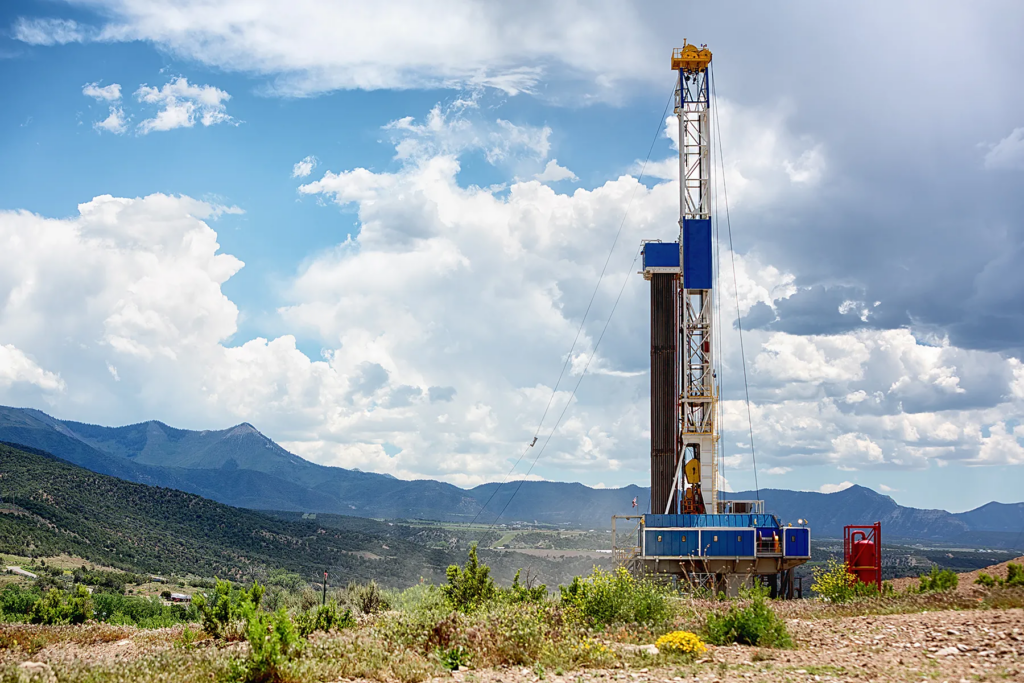
fracking

The Trenton Water Depot in Trenton

The fight for North Dakota’s fracking-water market

Print

It’s not that they lack water, like Texas and California. They are swimming in it, and it is free for the taking. Yet as the state’s Bakken shale fields have grown, so has the fight over who has the right to tap into the multimillion-dollar market to supply water to the energy sector.

North Dakota now accounts for over 10 percent of U.S. energy output, and production could double over the next decade. The state draws water from the Missouri River and aquifers for its hydraulic fracturing, the process also known as fracking and the key that has unlocked America’s abundant shale deposits. The process is water-intensive and requires more than 2 million gallons of water per well, equal to baths for some 40,000 people.

As in all booms, new players race in to meet the outsized demand. At the heart of this battle is a scrappy government-backed cooperative, conceived to ensure fresh water in an area where its drinkability is compromised.

The co-op has decided to sell 20 percent of its water to frackers to help keep prices low and pay back state loans. That has not gone down well with the Independent Water Providers, a loose confederation of ranchers, farmers and small businesses that for years has supplied fracking water.

Since opening in January, the co-op has tried to limit the power of the confederation with an aggressive legal and lobbying strategy. The Independent Water Providers have fought back, arguing that the co-op shouldn’t be selling fracking water at all. The state legislature stepped in with a law last month designed to quell the tension and nurture competition, but industry observers expect the acrimony to continue.

“When all of us had nothing (before the oil boom), there was nothing to fight about,” said Dan Kalil, a longtime commissioner in Williams County, home to many oil and natural gas wells. “Now, so many friendships have been destroyed because of water and oil.”

Jeanie Oudin, an analyst with energy consultancy Wood Mackenzie, predicts the competition could push down North Dakota fracking water prices at least 10 percent in the next few years, or roughly $170,000 per well. That’s a sizeable savings in a state where fracking costs are the highest in the country (remoteness meant there was little infrastructure in place). The water accounts for 20 percent of the roughly $8.5 million it costs to drill a North Dakota oil well.

“Regardless of where operators get their water from, the growth in active water depots should increase the availability of raw water for hydraulic fracturing and ultimately bring down costs,” Oudin said. The depots are where energy companies buy most of their fracking water.

The North Dakota Petroleum Council, a trade group for Statoil, Hess, Exxon Mobil, Marathon Oil and other large energy companies, declined to comment on the fight or to forecast how much water prices could fall. The council acknowledged that it would prefer multiple sources for the state’s 8,300 wells.

Energy companies get most of their water in the state by trucking it from depots to oil and natural gas wells. Some wells require more than 650 truckloads to frack. Companies such as EOG Resources Inc and Halliburton Co are experimenting with ways to reduce their dependence on water.

Fracking water depots, which cost roughly $200,000 to build and can gross more than $700,000 per year, are typically small metal buildings on concrete slabs filled with pumps and small tanks connected to the Missouri River or local aquifers. They can have two to six hookups and fill water trucks with as much as 7,800 gallons of water per visit.

The government-backed co-op has nine water depots to hold the fresh water that is piped from the treatment plant in Williston, about 45 miles north of Watford. It plans to build four more depots throughout the Bakken and hugely expand its pipeline system to bring fresh water to more homes. Small lines from the new pipelines will connect directly to some oil wells.

On the other side, Independent Water Providers member JMAC Resources will build more water depots in the region and a massive pipeline just south of the Missouri River to supply oil wells. Other members of the group have also applied for depot permits.

North Dakota water suppliers do not pay for water, and the state legislature rejected a proposed water tax earlier this year. Each side’s plans will rapidly increase the options that energy companies have to access water, further depressing prices.

DANGEROUS TO DRINK

The co-op, officially known as the Western Area Water Supply Project, was designed to boost the quality of the water reaching western North Dakota homes. State studies for years had identified high levels of sodium, sulfates and magnesium in the aquifers.

In Watford City, a dust-caked community of 2,000 dotted with oil-workers’ run-down RVs, the sodium level of the drinking water had been 18 times higher than the level recommended by the U.S. Environmental Protection Agency. “You would drink (it) and get high blood pressure,” said Mayor Brent Sanford.

The high chemical content convinced Watford City officials in 2010 to support the co-op as it was being organized, Sanford said.

By selling 20 percent of its water to frackers, the government-backed co-op hoped to keep water prices for homes low and generate enough revenue to pay back $110 million in state loans for the project. The co-op sells water to frackers at roughly 84 cents a barrel, compared to 21 cents a barrel for homes. (One barrel equals 31.5 gallons, about 119 liters.)

Denton Zubke, the co-op board’s chairman and a credit union president, has defended the co-op’s right to sell water to frackers as the independent ranchers and farmers decry what they see as government overreach into a private industry.

“Free enterprise was never going to bring potable water supply to rural parts of North Dakota,” said Zubke, who also operates a private water depot. “The only way we foresaw putting these water pipes in the ground was to pay for them with industrial (fracking) water sales.”

More than 230 million gallons of water flow every day past the Williston plant, and the co-op itself doesn’t expect water demand from homes to exceed capacity until at least 2032, calming any shorter-term concern about fracking’s taking water away from human uses.

CLOSEST IS BEST

Steve Mortenson, the Independent Water Providers’ chairman, says he supports the co-op’s clean-water mission but believes private industry is best equipped to provide fracking water. “We don’t feel we should have state-backed competition,” he said. “We never expected they would use the leverage of government to oppose private business.”

Confederation members can chose at what price to sell their water; most sell at 50 cents to 75 cents per barrel. Mortenson sells at 65 cents per barrel at his depot in Trenton, a bedroom community on the state’s western edge.

Mortenson, a soft-spoken rancher, offers washers, dryers, showers and free snacks at his depot as a gesture to the truck drivers who bring him business. Energy companies typically choose water depots closest to well sites to save on fuel costs, even if the price is higher than rival sites farther away. That has driven the building of even more water depots around the Bakken.

Zubke disputes the Water Providers’ claim to be any better at selling fracking water. He fears expansion by the independents could jeopardize the co-op’s ability to pay off its debt. Using a complex Depression-era federal law known as 1926(b), he and other co-op officials have been sending cease-and-desist letters to some confederation members throughout North Dakota. They’ve also lobbied state officials – so far, unsuccessfully – to deny water permits to some independents.

Despite the contentiousness – call it fracktion – the Independent Water Providers and the co-op are sticking with their plans.

“We don’t want to profit from the water,” JMAC owner Jon McCreary said. “We want to profit by selling the infrastructure to deliver the water.”


Story By: Earnest Scheyder

Orignal Link: http://www.reuters.com/article/2013/05/20/us-water-bakken-insight-idUSBRE94J02120130520

Polluted water

A Mother’s Story About Fracking

Print

This is a first hand description by Jodi from PA who was recently dosed with toxic chemical inside of her home that were released from a nearby well pad and gas line. She now has skin rashes on her face, neck and chest. She is nauseous and extremely tired.

farmsnotfracking

Faith group calls fracking morally wrong in opposing new center for shale development

Print

By JIM MACKINNON Published: April 2, 2013

Faith Communities for Frack Awareness issued the following press release today questioning the creation of a Center for Sustainable Shale Development: Faith Communities Together for Frack Awareness [FaCT] is profoundly concerned about the recent “agreement” between frackers and so-called “environmentalists” to establish a “Center for Sustainable Shale Development/CSSD,” which is to develop voluntary standards for the fracking industry to follow. We believe that this “agreement” will mislead the public into thinking that everything is all right with fracking. The public may incorrectly believe that since fracking corporations have entered into this agreement, that environmentalists now accept and approve of fracking. Nothing could be further from the truth. Virtually all environmental groups in Ohio and elsewhere are NOT represented by this “agreement,” nor were they even consulted during its development.

Principal players behind formation of CSSD are the Heinz Foundation and the Environmental Defense Fund (EDF), a group that is known among real environmentalists as a “greenwasher,” an environmental group that is willing to endorse weak regulations and industry self-regulation and reporting, and which provides a mantle of respectability for the industry, which it certainly does not deserve.

Just on the face of it, this agreement on voluntary standards is a sham. The key word here is voluntary. We’ve heard of such things before – terms like self-policing, self-regulating, and self-reporting. Pure and simple, it’s like putting the fox in charge of “regulating” the henhouse. We all know how that story will end. As the Executive Director of Food & Water Watch, Wenonah Hauter predicted, greenwashers like EDF and some others have swooped into states like Ohio where there are strong grassroots groups against fracking and “claim to represent environmentalists while they promote regulation that is so weak even the gas industry can live with it.”

Since April 2011, EDF has been positioning itself to undermine the science of Cornell University’s Robert Howarth, Renee Santoro, and Anthony Ingraffea in their peer-reviewed study that predicts that methane is the dirtiest fossil fuel, worse than coal. Dr. Ingraffea met with Fred Krupp and Mark Brownstein of EDF about a year ago, but Krupp and EDF are on a mission to completely discredit their findings.

As people of faith, we agree with Father Neil Pezzulo who has said that fracking “is a lie; and no matter how many times a lie is told, it is still a lie.” Fracking is morally wrong because it harms God’s creation, hurts and sickens people, and exploits the poor, especially in deprived rural areas. And we agree also with hydraulic fracturing engineer Dr. Anthony Ingraffea that the reason the industry does not make fracking safe is that cannot make it safe.

FaCT believes that the phony agreement and the resulting sham voluntary standards mislead the public and further distracts us from what should be our real goal as a society, which is to get completely off our hydrocarbon dependency and move to a new paradigm of green, safe, renewable energy. A warming world must not stall any longer, and it must not be distracted by greenwashers and corporate propagandists.

Gas Drilling Dimocks Plight

Protest in Pittsburgh today against new shale center

Print

The Marriage Between Shale and Sustainability is a Fake

PITTSBURGH, Penn. — A coalition of Pennsylvania and Ohio students and residents staged a mock wedding today at the EQT Plaza in downtown Pittsburgh to condemn the misguided union of corporations and environmental nonprofits through the Center for Sustainable Shale Development (CSSD). Oil and gas companies, such as Shell, Chevron, and CONSOL Energy, and environmental nonprofits, such as the Environmental Defense Fund (EDF), Pennsylvania Environmental Council (PEC), and Group Against Smog and Pollution (GASP), began working together in March of 2013 in order to create a set of voluntary regulations for hydraulic fracturing or “fracking.” The demonstrators have asked all environmental nonprofits to divorce themselves from CSSD due to irreconcilable differences.

CSSD’s central mission is to promote the idea of “sustainable shale,” but fracking is fundamentally unsustainable.Burning fossil fuels is the primary driver of climate destabilization and oil and gas are finite resources. The gas industry is well aware of this, having admitted that they can only provide gas for a limited amount of time. The concept of sustainable shale is an oxymoron. The gas industry is using their partnership with environmental nonprofits to co-opt the brand of sustainability and hide the destruction caused by fracking.

“CSSD is poised to greenwash fracking and congratulate companies for extraction that is anything but sustainable. In our region, the boom and bust of the fossil fuel industry has left landscapes poisoned and vacant. The last thing we need is the false hope of sustainable shale development,” said a Pittsburgh resident who asked not to be named.

Massive amounts of methane leak into the atmosphere during the life-cycle of gas production, exacerbating climate change. Fracking is economically unsustainable as well; communities that focus on extraction experience boom-bust cycles and are less prosperous  in the long term. There are also significant health impacts associated with fracking. A recent study found that risks of cancer were significantly elevated for people who live within half a mile of a fracking well.

Madeleine Dorner, the bride at the mock wedding, said, “The only future that we have is a sustainable one, and there is no room for fossil fuels in it. We have to transition to renewable energy immediately, not just move from one dirty fossil fuel to another.”

CSSD has created performance standards that rely on the voluntary participation of oil and gas companies. Companies that agree to these standards will receive a certification from CSSD – a paper pat on the back with no legal teeth to ensure compliance. Moreover, the regulations leave many of the most egregious problems unaddressed, “… including radioactivity, methane migration, drill cuttings, community disruption, forest fragmentation, LNG, and compressor stations.”

Story by: Bob Downing

Original Link: http://www.ohio.com/blogs/drilling/ohio-utica-shale-1.291290/protest-in-pittsburgh-today-against-new-shale-center-1.389867

leak-pipe-CD

Frackers Are Losing $1.5 Billion Yearly to Leaks

Print

Of all the many and varied consequences of fracking (water contamination, injured workers, earthquakes, the list goes on) one of the least understood is so-called “fugitive” methane emissions. Methane is the primary ingredient of natural gas, and it escapes into the atmosphere at every stage of production: at wells, in processing plants, and in pipes on its way to your house. According to a new study, it could become one of the worst climate impacts of the fracking boom—and yet, it’s one of the easiest to tackle right away. Best of all, fixing the leaks is good for the bottom line.

According to the World Resources Institute, natural gas producers allow $1.5 billion worth of methane to escape from their operations every year. That might sound like small change to an industry that drilled up some $66.5 billion worth of natural gas in 2012 alone, but it’s a big deal for the climate: While methane only makes up 10 percent of greenhouse gas emissions (20 percent of which comes from cow farts), it packs a global warming punch 20 times stronger than carbon dioxide.

“Those leaks are everywhere,” said WRI analyst James Bradbury, so fixing them would be “super low-hanging fruit.”

The problem, he says, is that right now those emissions aren’t directly regulated by the EPA. In President Obama’s first term, the EPA set new requirements for capturing other types of pollutants that escape from fracked wells, using technology that also, incidentally, limits methane. But without a cap on methane itself, WRI finds, the potent gas is free to escape at incredible rates, principally from leaky pipelines. The scale of the problem is hard to overstate: The Energy Department found that leaking methane could ultimately make natural gas—which purports to be a “clean” fossil fuel—even more damaging than coal, and an earlier WRI study found that fixing methane leaks would be the single biggest step the US could take toward meeting its long-term greenhouse gas reduction goals.

What’s more, the solution to the problem doesn’t rely on some kind futuristic, expensive technology: It’s literally a matter of patching up leaky pipes.

So what’s the holdup? For one thing, Bradbury says, that $1.5 billion in savings wouldn’t necessarily go to the companies making investments in fixing pipes: Gas inside a pipeline is owned by the producer, but the pipeline itself is owned by an independent operator who might not see any advantage in preventing methane leaks. The other issue is detection: Methane is colorless and can be odorless, so there’s no way to know when it’s escaping, where, and how fast, without special equipment. Gear to simplify the detection process is beginning to crop up on the market, but without a government mandate there’s less incentive for companies to invest in it. And without hard data on much methane they’re losing, companies are disinclined to address the problem—especially across all of the nation’s 300,000 miles of natural gas pipelines.

Or simply unwilling: A recent (debunked) report from the American Natural Gas Alliance claims the methane emissions risk is way over-hyped; an industry spokesperson said current practices were already enough to ensure that “people don’t need to trade protection of air, land and water for economic advancement.”

This is where the EPA needs to step in, Bradbury says. Under the Clean Air Act, the EPA could regulate all greenhouse gas emissions, which would cover not only methane but also the main climate change culprit, CO2. It could, at a minimum, require companies to monitor these emissions. And it could reward companies that take action via recognition in its fracking best-practices program, Natural Gas STAR. Finally, the EPA could provide better support to the state-level agencies that are ultimately responsible for enforcing Clean Air Act rules.

If the president is serious about tackling climate change from the Oval Office, Bradbury said, there could hardly be a better place to start than here.

“We need to be focused on solutions and not take a wait-and-see approach,” he said. “You want to get these rules in place at the front end; we’re already playing catch-up.”


Story by: Tim McDonnell

Original Link: http://climatedesk.org/2013/04/frackers-are-losing-1-5-billion-yearly-to-leaks/

628x471

Even if Prepared – If No One Sounds The Alarm Someone Gets Hurt

Print

They called 911 but never alerted the residents – They evacuated 22 families as the oil spilled out but won’t tell us the risks – the train derailment is being cleaned up but people are still sick — the seven inch well stack exploded into the air like a missile – Where are the Protections?

In Montrose Borough, PA a woman was concerned and curious about a loud noise coming from a fracking site not too far from her home. Vera Scroggins decided to take a ride and find out what was happening. She described this journey in her letter to the editor.

“I was in a friend’s living room on March 19th in Montrose Borough, Pa., Susquehanna County, at about 5 p.m., and heard a loud noise going on for eventually over an hour and it sounded almost like a gas flare but later found out it was an ESD release, an emergency shutdown, of pipelines as part of safety measures and routine maintenance.

I followed the sound to Sterling Rd., South Montrose, about 2 miles away or more and it was loudest there. People, like myself, were driving around trying to find out what this was. This was a new experience for me. I have found out that gases were released for over an hour and we, the community are being exposed to this by Williams Gas.”

It is amazing how this story is the same as the story from families living around chemical plants, pipelines, incinerators, dumpsites and so many more dangerous places. Government and corporate profiteers get away with releasing chemicals accidentally or on purpose and don’t have to notify people at risk.

As a result there is no way for innocent families to prepare themselves for the danger. Families often think about fire and have a fire alarm or explain to children in the event of a fire in the homes here is what you do. Schools across the country have fire drills so that students and staff are prepared in the event of a fire.

Yet in communities like Vera’s or most recently March 29th in Arkansas a pipeline rupture where tar sands sludge spilled 12,000 barrels of oil throughout the community causing the evacuation of at least 22 families. March 30th a fracking explosion shot a huge, long pipe into the air landing in the cab of a construction truck. Earlier in March in Paulsboro, NJ a train derailed and a toxic cloud covered the area people were confused about what to do but worse they were told the risk was low. Yet a 77 year old woman died after breathing those toxic chemicals from the train derailment.

Vera is right when she said in her letter, when she talked about the lack of notification and preparedness for such accidents. “No one in the community was notified except 911 about this. We need to know who to call when this happens and be told what it is to allay our fears and anxiety. And we need to know what the health impacts from gases being released from pipelines in this instance and any more that will happen in the future.”

In all of these situations we often talk about the issues in a bigger broader context but the past month has really demonstrated how local the issues are and that our focus needs to include large policies or regulatory change but also change that can address the many needs for safety notification and enforcement at the local frontline communities.

Vera and other just like her across the country want answers and help. It’s time to focus on these needs.

How-an-injection-well-works

What’s in store for North Carolina’s fracking future?

Print

Lifting a statewide ban on deep injection wells for contaminated wastewater could have implications beyond just the fracking industry, experts say.

“There are a lot of industries that would like to inject waste into the ground here on the Coastal Plain,” said Charlie Stehman, a retired professional geologist and former supervisor of the state Division of Water Quality’s Aquifer Protection Section. “Not just industry, but municipal wastewater systems. There are aquifers in Sanford and closer to Fayetteville that probably could accept waste, but the legislation right now says that no injection can take place.”

The statewide ban, in place for roughly 40 years, was passed after injection wells used by an industrial company in New Hanover County leached contaminants into surrounding groundwater supplies. Hercules, which manufactured raw materials used to produce polyester fabrics, drilled a handful of deep injection wells off U.S. 421, about four miles outside Wilmington.

The Hercules lesson

From 1968 to 1972, the company pumped hundreds of thousands of gallons of terephthalic acid into the wells each day, culminating in unsustainably high pressure underground that caused them to fail.

“Pressures rose so high they just couldn’t force any more stuff into the ground,” Stehman said. “They switched to another well, which I believe was a monitoring well, and were pushing stuff into that one. That one over-pressured as well, and then they switched to a third one and finally gave up.”

But not before damage was done. State officials later found that the chemicals had leached into the area’s upper aquifers, a discovery that led to the state’s current ban on that type of deep injection wells. Legislators in Raleigh are now seeking to repeal that measure, potentially allowing fracking companies to blast for natural gas in the Piedmont region, then truck the contaminated wastewater byproduct to the coast and once more inject it underground.

“In the Senate fracking bill, they had a provision that lifted the ban on injection wells,” said freshman Rep. Rick Catlin, R-New Hanover, one of a handful of legislators who have voiced concerns over the provision. “Hercules really became the poster child for not doing this. You don’t have to inject the wastewater. You can treat it, either by placing it in evaporation ponds or by a treatment process, but from the oil companies’ perspective, injection is probably the least expensive way to do it.”

Untested theory

Theoretically, the Coastal Plain, composed of porous sediments and soft, semi-consolidated rock like limestone, would be the most logical place in the state for injection wells to be placed. Within that plain, layers are thickest near Hatteras, according to Paul Thayer, professor emeritus of geology at the University of North Carolina Wilmington.

“As you go in a seaward direction, the thickness increases. As you get deeper, towards the base of that, all of those layers tend to be filled with saltwater,” he said. “Potentially, if those saltwater layers were isolated from the overlying layers that might contain freshwater, it would be possible to inject things into the deep subsurface.”

But no detailed studies have ever been conducted to confirm that hypothesis, he said.

“That would be absolutely necessary,” Thayer said. “You’ve got to have detailed studies ahead of time before you willy-nilly start putting stuff into the ground.”

If the injection well ban stands, it’s unclear what, if any, fracking side effects could make their way to the coast. There’s an off-chance, Stehman said, that if fracking took place in or near the Deep River, a 125-mile-long Cape Fear River tributary north of Sanford, some contaminants could make their way into Wilmington’s watershed, though the likelihood of that possibility is unclear.

“It’s probably not a great potential, but it’s certainly something one would have to look into,” he said.

Catlin, a hydrogeologist and environmental engineer, was more optimistic.

“Injection wells, from a coastal perspective, are most concerning,” he said. “I doubt there would be any other direct impact on the coast. But it needs to be studied.”


Story By: Kate Elizabeth Queram

Original Link: http://www.starnewsonline.com/article/20130317/ARTICLES/130319696

frack attack rally 7-28-12

Sierra Club Blasts New Plan To Improve Fracking

Print

“We know that our continued reliance on dirty, dangerous fossil fuels, like natural gas, will not solve the climate crisis, even with the best controls in place,” said Deb Nardone, a Sierra Club campaign director, who called the new plan “akin to slapping a Band-Aid on a gaping wound.” Read more.

OHIO RALLY-(15)

A day in the life of CHEJ staff.

Print

A Cold Wednesday in March Demonstrated the reach CHEJ has and how much is really accomplished.

A Cold, Windy and Snowy Day Did Not Stop Us.

Wednesday March 6th a storm was brewing across the Midwest and Northeast.  Despite the snow and travel warnings CHEJ’s leaders moved forward.  Here is what happened on that cold, windy and snowy Wednesday in March.

A day in the life of CHEJ

As I juggle calls from activists across the state of Ohio working on fracking, deep well injection, air pollution, cancer clusters and more I’m freezing outside at and anti injection well rally at the state capital.  Cold and tired watching e-mails cross my phone from CHEJ’s home office I realize how much CHEJ does in a day to move the country toward a safe, healthy and justice place for American families.

While I’m in Columbus, Ohio participating with my neighbors and friends to speak out about fracking waste disposal.  Even with the nasty weather, over 125 people gather at the state house to ask legislators to  stop accepting out-of-state fracking wastes. Ohio now has over 200 injection wells and last year accepted  581,559,594 gallons (that’s right over 581 million gallons) of fracking wastes.

My co-worker is working on greening the market place organized a shareholder action in Arizona around Disney’s use of poison plastic in toys and other children’s products.  This morning a shareholder action was held in Phoenix, Arizona.  Leaders handed out informational packets to Disney shareholders to ask them to stop using PVC the poison plastic in their toys.  Many shareholders had no idea that toys were being made in a way that could harm young children.

Commemorating 35th Anniversary of Love Canal

In New York City

That same evening a celebration and fundraiser was held in New York City with our Executive Director Lois Gibbs.  This was our first event  of several, commemorations of Love Canal events 35 years ago were underway.  Chevy and Jayni Chase joined us as our special guest along with 67 others who braved the weather to celebrate with us that evening.  CHEJ surpassed our fundraising goal at the event and launched the Leadership Training Academy.  Great time was had by all with great food, drinks, conversations with colleagues and a preview of the new documentary A Fierce Green Fire, The Battle for A Living Planet.